

Posted by Aham Emmanuel
03 Jun, 2026
Nigeria’s Debt to World Bank’s IDA Hits $18.5 Billion
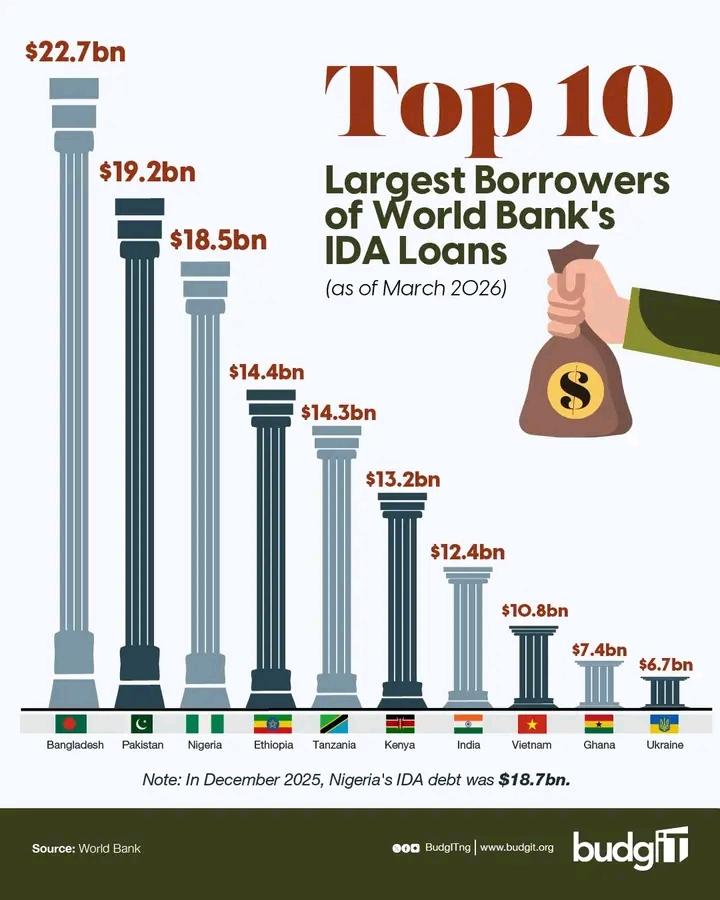
Nigeria currently owes the World Bank’s International Development Association (IDA) a total of $18.5 billion (₦25.4 trillion), making it the third‑largest borrower on the IDA list after Bangladesh and Pakistan.
Between December 2025 and March 2026, Nigeria’s debt slightly decreased from $18.7 billion to $18.5 billion — a marginal change on such a large scale. Despite the relatively small adjustment, the figure underscores the country’s heavy reliance on concessional loans.
IDA loans are considered easier to manage because they come with low interest rates and flexible repayment terms. However, analysts warn that the sheer size of Nigeria’s debt remains a burden, raising questions about whether the borrowed funds are being invested in projects that can genuinely grow the economy and reduce the debt over time.
Nigeria’s debt position also means it owes more than countries such as India, Ethiopia, and Kenya, highlighting the scale of its financial obligations.