

Posted by Aham Emmanuel
04 Jul, 2026
Man suits Satan and his staff for interfering And causing suffering to his life
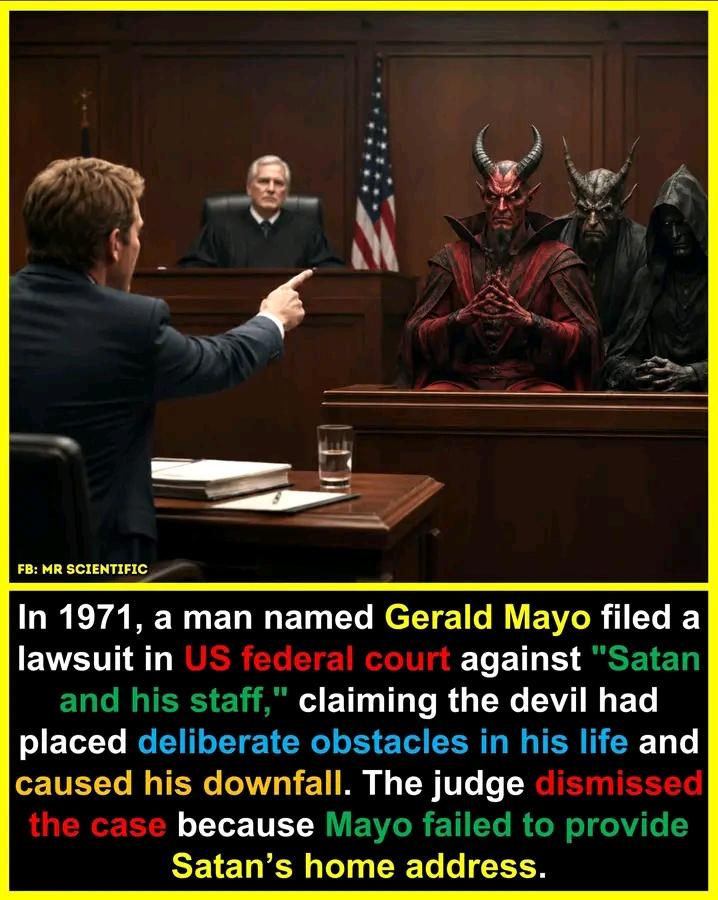
In one of the most unusual cases ever filed in a U.S. federal court, Gerald Mayo submitted a handwritten lawsuit against “Satan and his staff” in 1971. He claimed that the devil had interfered with his life, caused suffering, and violated his constitutional rights.
The case quickly became famous because it forced the court to wrestle with how ordinary legal rules might apply to such an extraordinary defendant. The judge even joked about practical issues, such as whether Satan could be properly served with legal papers and whether the court had jurisdiction over him. Importantly, the case was not dismissed simply because Mayo failed to provide Satan’s home address.
Ultimately, the court threw out the lawsuit because it lacked a valid legal basis and raised fundamental procedural problems that made it impossible to proceed. The ruling highlighted the limits of the judicial system when confronted with claims that fall outside the scope of law.
This bizarre episode remains a classic example of frivolous lawsuits and is often cited in discussions about the boundaries of legal process and the creativity — or desperation — of litigants.